
AI in Cardiology: New Technologies and Applications from the 19th Congress on Cardiology 2026



- Intro
- From CardioAI Bulgaria to the National Congress: A Year of Accelerated Transformation
- AI Is No Longer Just Chat: Digital Twins and the Doctor’s New Tools
- AI in Everyday Clinical Practice: Less Administration, More Time for Patients
- NHIS and the European Health Data Space: The Foundation of Connected Medicine
- From Technological Capabilities to Real Value for the Patient
From digital twins of the heart and AI assistants to the automation of clinical processes and connected health data—the digital transformation of cardiology is entering a new phase. These trends were the focus of a specialized session at the 19th National Congress of Cardiology on October 10, 2026, continuing the joint initiatives of the Bulgarian Society of Cardiologists and DHI Cluster Bulgaria.
Artificial intelligence is no longer just a promise for the medicine of the future. It is making its way into diagnostics, clinical data analysis, and the day-to-day organization of healthcare. In cardiology, where ECG signals, medical images, and patient monitoring data offer enormous potential for new applications, technological development is particularly dynamic.
But how close are we to the moment when these possibilities will become part of every cardiologist’s daily practice?
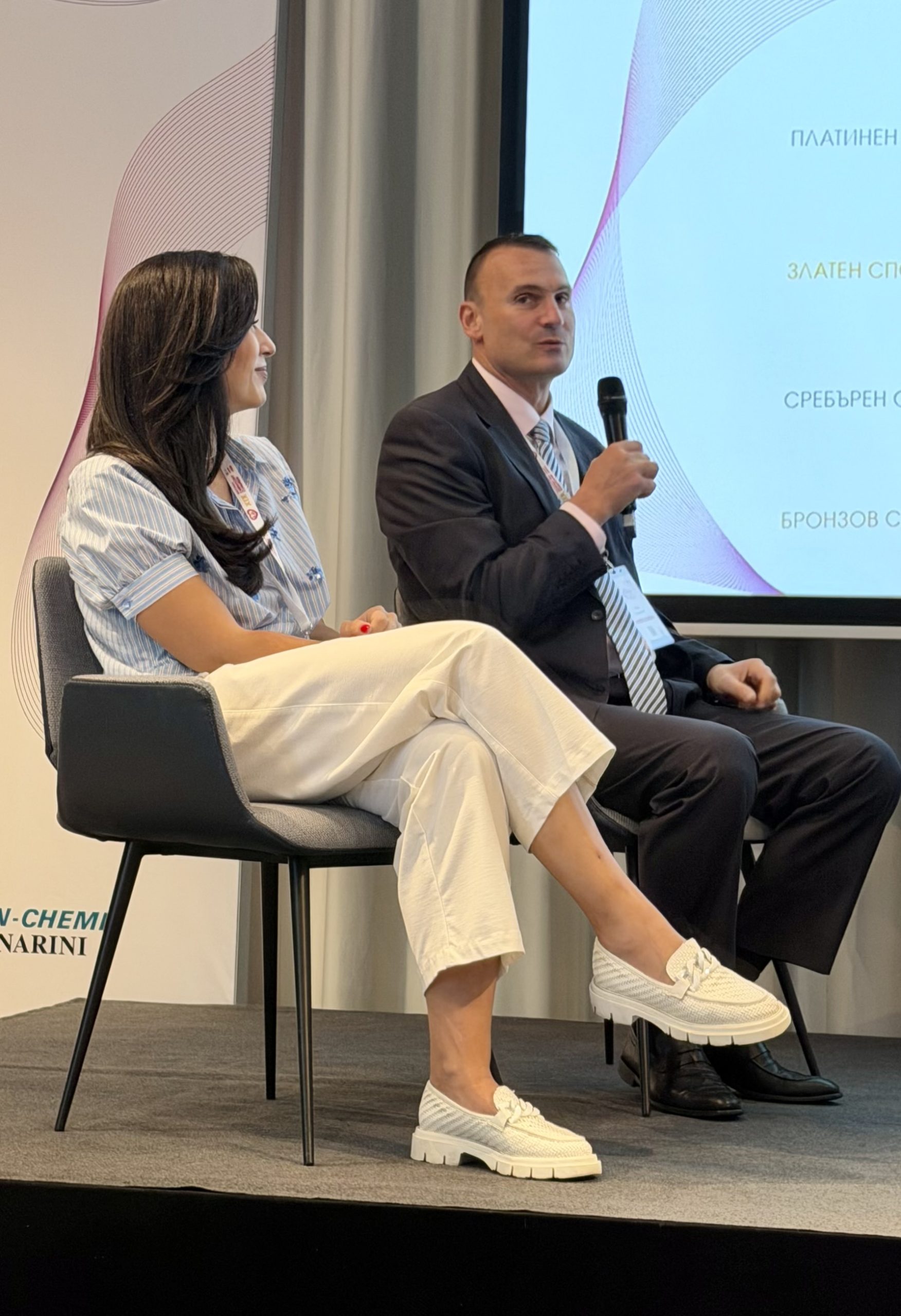
This question brought together the participants in the session “What Happened in the Digital Year 2026,” moderated by Prof. Kiril Karamfilov, president of the Bulgarian Society of Cardiologists, and Mira Ganova, executive director of DHI Cluster. The discussion presented three perspectives: the development of AI technologies, their application in clinical practice, and the role of the national health information infrastructure.
From CardioAI Bulgaria to the National Congress: A Year of Accelerated Transformation
The October meeting continued the dialogue that began on May 29-30 with the CardioAI Bulgaria 2026 symposium - “Cardiology in the New Reality: AI, Data, and Continuous Care” - organized by the Bulgarian Society of Cardiologists in partnership with the DHI Cluster. The two-day forum brought together cardiologists, technology experts, and representatives of the healthcare industry to discuss AI applications - ranging from ECG and medical image analysis to digital biomarkers, predictive models, remote monitoring, and digital twins.
The technologies presented highlighted a fundamental shift: from episodic examinations to continuous monitoring, from data analysis to risk prediction, and from technology demonstrations to clinical applications.
The main conclusion was that technological potential does not guarantee better care without reliable data, clinical validation, and integration into real-world workflows. It was precisely on this foundation that the October session was built.
AI Is No Longer Just Chat: Digital Twins and the Doctor’s New Tools
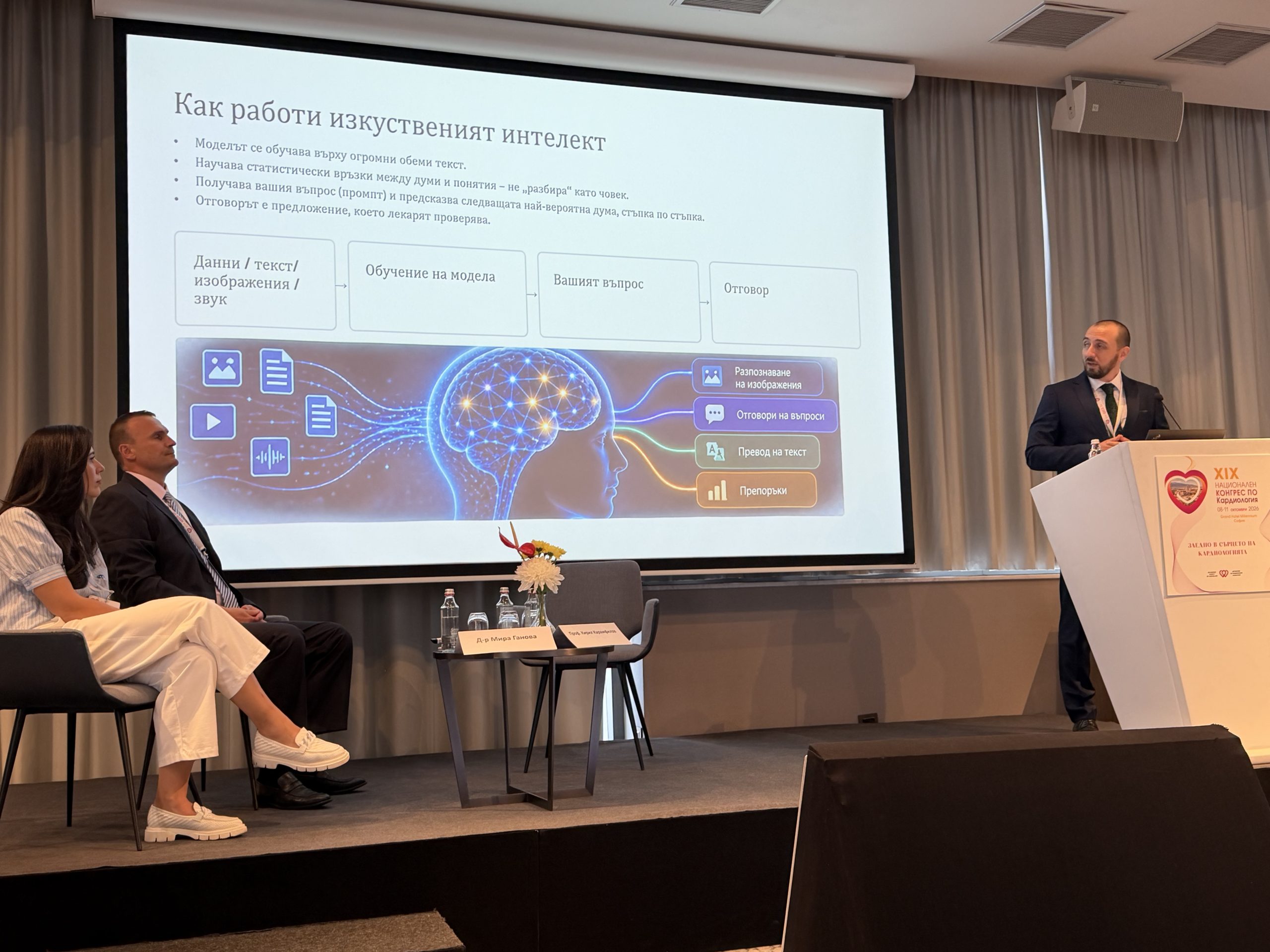
Martin Stoyanov, head of the Big Data and Artificial Intelligence unit at Atos Bulgaria, presented the development of AI systems and applications that are gradually being integrated into medical practice.
Among the examples was generative AI as an assistant in processing medical information. Instead of reviewing dozens of pages of medical records, lab results, and clinical guidelines, a doctor can use an AI assistant to structure the information and extract key data.
“What you can do with the help of modern assistants is to feed all the information from a patient’s old documents into the system and get a structured, clear answer out of the chaos.”
Head of the big data and artificial intelligence unit at Atos Bulgaria
Particularly impressive was the demonstration of a digital model of the human heart, created using AI tools. The interactive visualization showcased the capabilities for anatomical modeling and blood flow simulation, as well as the rapid pace at which such technologies are advancing. Although the model is intended for demonstration purposes, it highlights the prospects for personalized medical simulations.
The message was clear: AI expands the capabilities of physicians, but clinical judgment and responsibility remain human.
AI in Everyday Clinical Practice: Less Administration, More Time for Patients
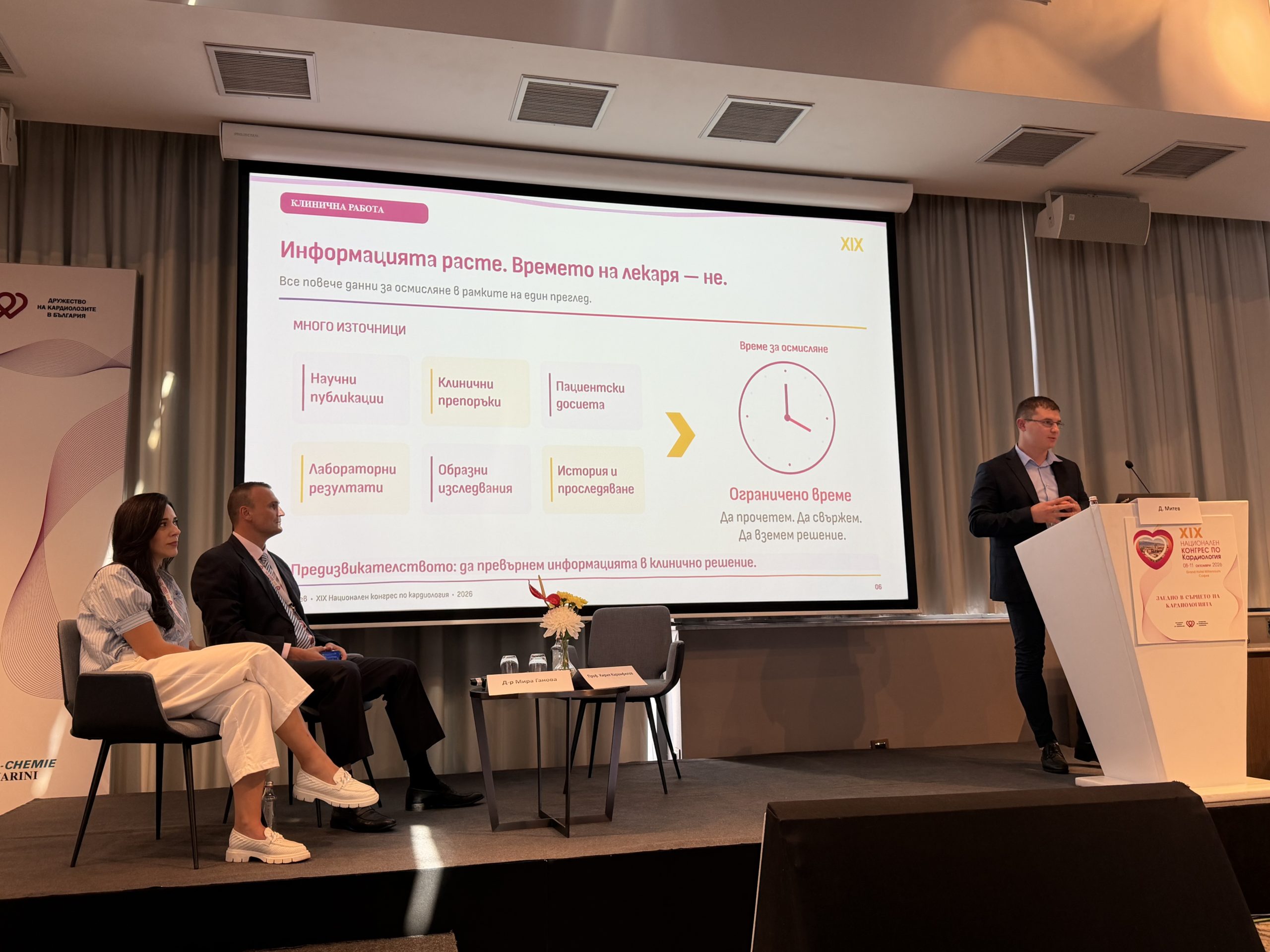
Dr. Dimitar Mitev, director of Zdraveto Hospital, presented specific AI applications that are already being used in the hospital’s daily operations.
“I believe that the Bulgarian healthcare system has the potential for a quantum leap, not just experimental improvements.”
Director of Zdraveto Hospital
Among the solutions presented was Dr. Copilot - an AI assistant that consolidates clinical information in one place, prepares a summary of the medical case, and offers guidance on differential diagnosis and laboratory interpretation, subject to physician review. Another system acts as a sort of “second opinion,” flagging potential clinical oversights and possible drug contraindications.
The hospital is also already using an AI voice bot that tracks appointments and provides information to patients. Internal processes have also been digitized, including operating room scheduling and shift coordination.
These examples demonstrate that AI can transform not only diagnostics but also the organization of medical care - with less administrative burden, better coordination, and more time for the patient.
NHIS and the European Health Data Space: The Foundation of Connected Medicine
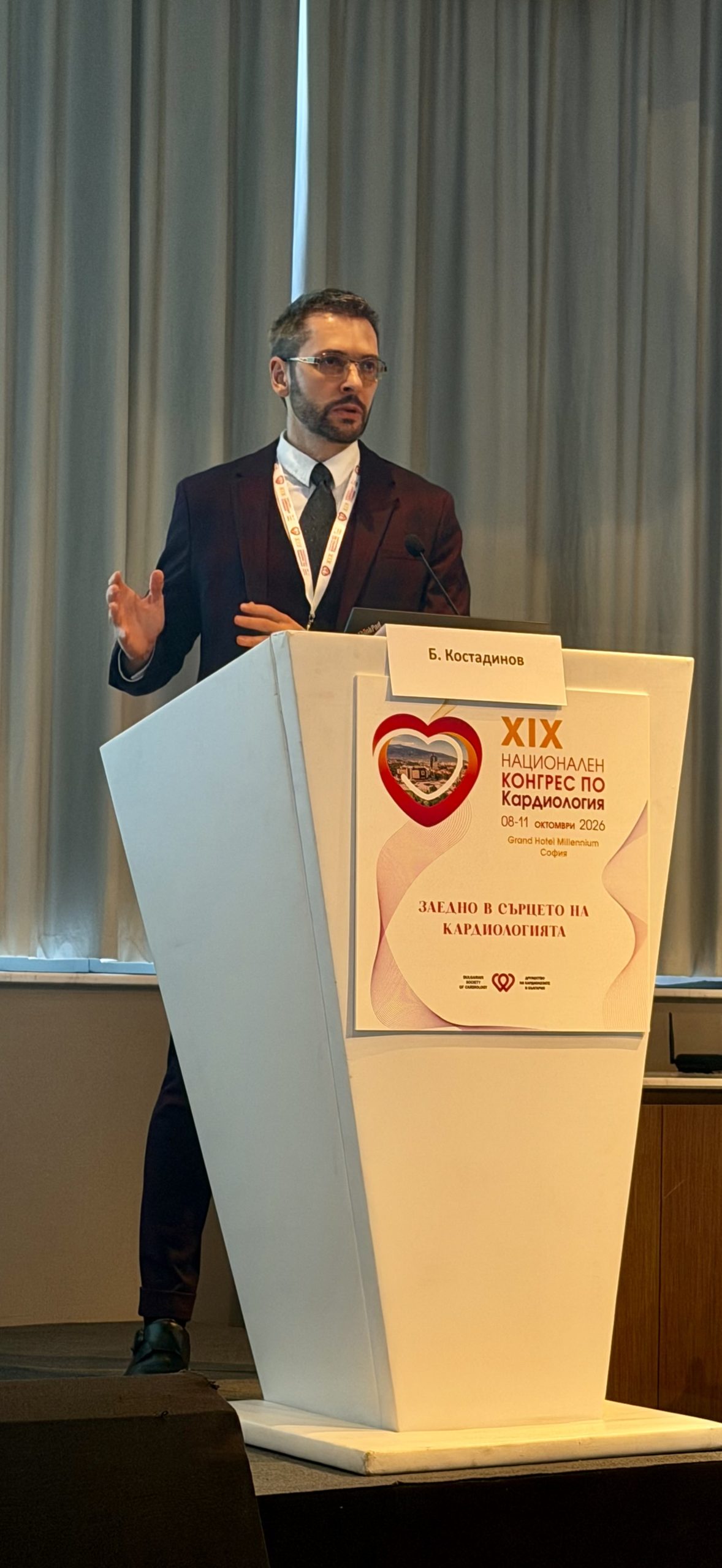
High-quality, interconnected health data is the foundation for the development of reliable AI solutions in medicine. It was precisely this perspective that was the focus of Boris Kostadinov, Director of the “Software Integration” department at Information Services, who presented the development of the National Health Information System (NHIS) and Bulgaria’s role in the emerging European Health Data Space (EHDS).
The European framework includes two main pillars: MyHealth@EU for the cross-border exchange of medical information for the benefit of patients, and HealthData@EU for the secondary use of health data for scientific research, analysis, and innovation.
Bulgaria has a key prerequisite for participating in the European ecosystem - a functioning national system that consolidates significant volumes of health information. Challenges remain related to interoperability, standardization, and data quality.
“Especially in medicine, working with poor-quality data carries a very high risk, both for the patient and for medicine as a whole.”
Director of the "Software Integration" Department at Information Services
The development of the National Health Information System (NHIS) and related health data is key to the future of digital medicine, including the monitoring of patients with chronic conditions and the implementation of reliable AI solutions.
From Technological Capabilities to Real Value for the Patient
The two events in 2026 highlighted the importance of collaboration between the medical community, the technology sector, and institutions for the future of cardiology. The partnership between the Bulgarian Society of Cardiologists and the DHI Cluster creates a space for this dialogue, linking clinical expertise with technological innovations and national digital transformation processes.
In conclusion, Mira Ganova highlighted the collaboration between the DHI Cluster and NHIS to integrate laboratory data and biometric information from wearable devices into the national system—an example of the practical possibilities of connected health data.
For the DHI Cluster, these initiatives are part of its long-term mission to develop an innovative, connected, and patient-centered healthcare ecosystem.


- Intro
- From CardioAI Bulgaria to the National Congress: A Year of Accelerated Transformation
- AI Is No Longer Just Chat: Digital Twins and the Doctor’s New Tools
- AI in Everyday Clinical Practice: Less Administration, More Time for Patients
- NHIS and the European Health Data Space: The Foundation of Connected Medicine
- From Technological Capabilities to Real Value for the Patient



 Trusted Partnerships
 Domain Expertise Access
 Community Growth
 Healthcare Innovation
